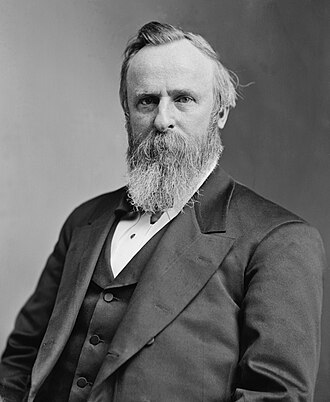
Early Statesman synthesis distilling legal jargon into practical meaning, statutory anchors, and structural constitutional impacts.
This executive order, signed by President Rutherford B. Hayes on 1877-05-26, establishes federal administrative policy concerning "["The Civil Service Order"]." It is a direct, concise executive instruction delivering focused administrative or military commands to department leadership.
Constitutional Assessment: This action represents an orderly exercise of Article II administrative discretion, managing the internal machinery and personnel of the executive branch without abridging the ancient liberties of the people.
Key Directives & Operative Actions
▪Formal executive instruction issued by the President establishing official administrative policy on ["The Civil Service Order"].
Exec. Order, "Executive Order ["The Civil Service Order"]," Rutherford B. Hayes (May 26, 1877). Available at https://executiveordersarchive.org/orders/app-executive-order-the-civil-service-order.
Official Document Text
Source: The American Presidency Project (UCSB Archive)
Hon. JOHN SHERMAN, Secretary of the Treasury. My DEAR SIR: I have read the partial report of the commission appointed to examine the New York custom-house. I concur with the commission in their recommendations. It is my wish that the collection of the revenues should be free from partisan control, and organized on a strictly business basis, with the same guaranties for efficiency and fidelity in the selection of the chief and subordinate officers that would be required by a prudent merchant. Party leaders should have no more influence in appointments than other equally respectable citizens. No assessments for political purposes on officers or subordinates should be allowed. No useless officer or employee should be retained. No officer should be required or permitted to take part in the management of political organizations, caucuses, conventions, or election campaigns. Their right to vote and to express their views on public questions, either orally or through the press, is not denied, provided it does not interfere with the discharge of their official duties. Respectfully, R.B. HAYES