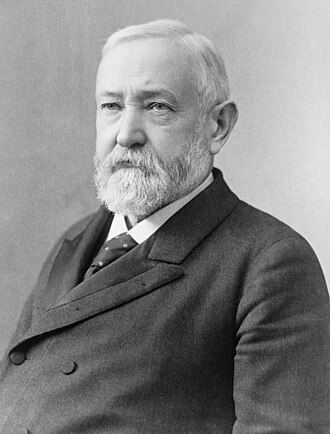
Early Statesman synthesis distilling legal jargon into practical meaning, statutory anchors, and structural constitutional impacts.
This executive order, signed by President Benjamin Harrison on 1891-12-04, establishes federal administrative policy concerning "Executive Order." It is a direct, concise executive instruction delivering focused administrative or military commands to department leadership.
Constitutional Assessment: This action represents an orderly exercise of Article II administrative discretion, managing the internal machinery and personnel of the executive branch without abridging the ancient liberties of the people.
Key Directives & Operative Actions
▪Formal executive instruction issued by the President establishing official administrative policy on Executive Order.
Constitutional & Societal Entities Impacted
🏛️ Executive Departments & Federal Civil Servants
Total Words
247
1,436 characters
Estimated Read Time
1 min
@ 200 words / min
Flesch-Kincaid
15
Post-Grad reading level
Constitutional Polarity
+0.02
Framers' Alignment index
📜
Scholarly & Legal Citations
Exec. Order, "Executive Order," Benjamin Harrison (Dec 4, 1891). Available at https://executiveordersarchive.org/orders/app-executive-order-235.
Official Document Text
Source: The American Presidency Project (UCSB Archive)
SIR:* In my message to the first session of the Fifty-first Congress I said: I have suggested to the heads of the Executive Departments that they consider whether a record might not be kept in each bureau of all those elements that are covered by the terms "faithfulness" and "efficiency," and a rating made showing the relative merits of the clerks of each class, this rating to be regarded as a test of merit in making promotions. *Addressed to the heads of the Executive Departments. In some of the Departments this suggestion has been acted upon in part at least, and I now direct that in your Department a plan be at once devised and put in operation for keeping an efficiency record of all persons within the classified service, with a view to placing promotions wholly upon the basis of merit. It is intended to make provision for carrying into effect the stipulations of the civil-service law in relation to promotions in the classified service. To that end the rule requiring compulsory examination has been rescinded. In my opinion the examination for promotion of those who present themselves should be chiefly, if not wholly, upon their knowledge of the work of the bureau or Department to which they belong and the record of efficiency made by them during their previous service. I think the records of efficiency kept from day to day should be open to the inspection of the clerks. Very respectfully, yours, BENJ. HARRISON