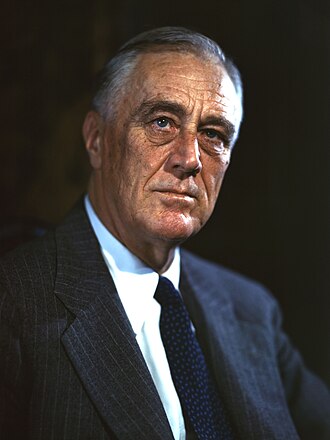
Official Document Text
Source: The American Presidency Project (UCSB Archive)
By virtue of the authority vested in me by the Constitution and statutes, as President of the United States, and in order to meet the manpower requirements of our armed forces and our expanding war production program by a fuller utilization of our available manpower, it is hereby ordered: 1. For the duration of the war, no plant, factory, or other place of employment shall be deemed to be making the most effective utilization of its manpower if the minimum work week therein is less than 48 hours per week. 2. All departments and agencies of the Federal Government shall require their contractors to comply with the minimum work week prescribed in this Order and with policies, directives, and regulations prescribed hereunder, and shall promptly take such action as may be necessary for that purpose. 3. The Chairman of the War Manpower Commission shall determine all questions of interpretation and application arising under this Order and shall formulate and issue such policies, directives, and regulations as he determines to be necessary to carry out this Order and to effectuate its purposes. The Chairman of the War Manpower Commission is authorized to establish a minimum work week greater or less than that established in section 1 of this Order or take other action with respect to any case or type of case in which he determines that such different minimum work week or other action would more effectively contribute to the war effort and promote the purposes of this Order. 4. All departments and agencies of the Federal Government shall comply with such policies, directives, and regulations as the Chairman of the War Manpower Commission shall prescribe pursuant to this Order, and shall so utilize their facilities, services, and personnel, and take such action under authority vested in them by law, as the Chairman determines to be necessary to effectuate the purposes of this Order and promote compliance with its provisions. 5. Nothing in this Order shall be construed as superseding or in conflict with any Federal, State, or local law limiting hours of work or with the provisions of any individual or collective bargaining agreement with respect to rates of pay for hours worked in excess of the agreed or customary work week, nor shall this Order be construed as suspending or modifying any provision of the Fair Labor Standards Act (Act of June 25, 1938; 52 Stat. 1060; 29 U.S.G. 201 et seq.) or any other Federal, State, or local law relating to the payment of wages or overtime. FRANKLIN D ROOSEVELT The White House, February 9, 1943.