Early Statesman synthesis distilling legal jargon into practical meaning, statutory anchors, and structural constitutional impacts.
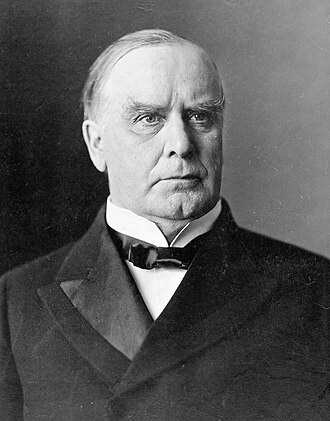
This executive order, signed by President William McKinley on 1901-03-09, establishes federal administrative policy concerning "Executive Order." It is a direct, concise executive instruction delivering focused administrative or military commands to department leadership.
Constitutional Assessment: This action represents an orderly exercise of Article II administrative discretion, managing the internal machinery and personnel of the executive branch without abridging the ancient liberties of the people.
Key Directives & Operative Actions
▪The Internal Revenue District of Nebraska shall comprise the State of Nebraska.
Constitutional & Societal Entities Impacted
🏛️ Sovereign State Governments & Localities
🏛️ Financial Institutions & Monetary Authorities
Total Words
96
584 characters
Estimated Read Time
1 min
@ 200 words / min
Flesch-Kincaid
13.2
Post-Grad reading level
Constitutional Polarity
+0.02
Framers' Alignment index
📜
Scholarly & Legal Citations
Exec. Order, "Executive Order," William McKinley (Mar 9, 1901). Available at https://executiveordersarchive.org/orders/app-executive-order-80.
Official Document Text
Source: The American Presidency Project (UCSB Archive)
I, William McKinley, President of the United States, by virtue of the authority vested in me by Section 3141, Revised Statutes of the United States, hereby order that the States of North Dakota and South Dakota, now part of the Internal Revenue District of Nebraska, shall be detached from said District of Nebraska and constitute one District, to be known as the Internal Revenue District of Newark, South Dakota. The Internal Revenue District of Nebraska shall comprise the State of Nebraska. This order to take effect on the first day of May, 1901. WILLIAM MCKINLEY (Endorsements.)