Early Statesman synthesis distilling legal jargon into practical meaning, statutory anchors, and structural constitutional impacts.
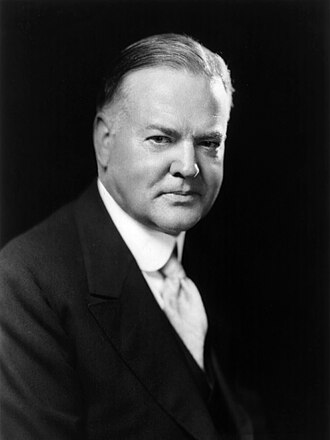
This executive order, signed by President Herbert Hoover on 1932-06-30, establishes federal administrative policy concerning "Temporary Exemption of Persons from Compulsory Retirement for Age." It outlines operative directives for executive department officers, delegating enforcement responsibilities and establishing official governance guidelines.
Constitutional Assessment: Scrutinized through Article II, Section 2, this action exercises the President's constitutional role as Commander in Chief. Early Framers recognized broad executive discretion in commanding military forces during conflict, provided it remains bounded by congressional declarations and respects civilian domestic courts.
Key Directives & Operative Actions
▪Murry " " William McLean " " Edgar Wommack " " These temporary exemptions are made so as to afford the time necessary to determine whether the public interest requires that permanent exemptions be granted.
Constitutional & Societal Entities Impacted
🏛️ Armed Forces & Military Establishments
🏛️ Sovereign State Governments & Localities
🏛️ Executive Departments & Federal Civil Servants
🏛️ Private Citizens & Property Owners
🏛️ Financial Institutions & Monetary Authorities
Total Words
320
1,733 characters
Estimated Read Time
2 min
@ 200 words / min
Flesch-Kincaid
8
Post-Grad reading level
Constitutional Polarity
+0.02
Framers' Alignment index
📜
Scholarly & Legal Citations
Exec. Order No. 5873, Herbert Hoover (Jun 30, 1932). Available at https://executiveordersarchive.org/orders/app-executive-order-5873-temporary-exemption-persons-from-compulsory-retirement-for-age.
Official Document Text
Source: The American Presidency Project (UCSB Archive)
By virtue of the authority vested in me be section 204 of Part II of the act entitled "AN ACT Making appropriations for the Legislative Branch of the Government for the fiscal year ending June 30, 1933, and for other purposes," approved June 30, 1932, the following-named persons who have reached the retirement age prescribed for automatic separation from the service, are hereby temporarily exempted from the provisions of that section and continued in the service until August 1, 1932. Name Department or establishment Millard J. Moore Department of Commerce Frank C. Skinner " " Joseph A. Hill " " Jasper S. Bilby " " Stephen J. Kubel Department of the Interior John M. Nickles " " Charles J. Groseclose " " James H. H. Hewett " " William Bertrand Acker " " Timothy W. Stanton " " Mrs. Carrie B. Alien " " Horace M. Sanford Department of State William A. Newcome " " Frank H. Larned " " Miles M. Shand " " Sydney Y. Smith " " George 0. Von Nerta Treasury Department Clarence A. Miller " " Ernest K. Wilkins " " Joseph D. Nevius " " George W. Ashworth " " William D. Heins " " Thomas H. Carroll " " Henry B. Shuman " " George W. Koonce War Department Francis A. Sebring District of Columbia Oscar D. Weed Interstate Commerce Commission James Edward Jones " " " Samuel Keemle " " " John T. Marchand " " " Fred W. Ranno " " " Frank H. Cole Smithsonian Institution Coates W. Shoemaker " " Joseph Michaelson Navy Department George W. Littlehale " " Thomas F. Flanagan " " Oliver P. Murry " " William McLean " " Edgar Wommack " " These temporary exemptions are made so as to afford the time necessary to determine whether the public interest requires that permanent exemptions be granted. HERBERT HOOVER The White House, June 30, 1932.