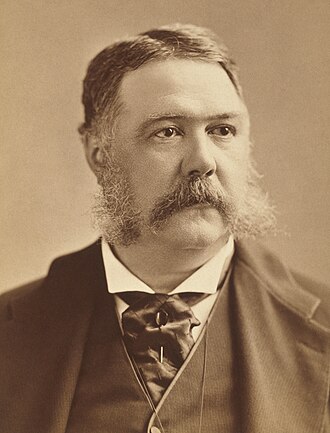
Early Statesman synthesis distilling legal jargon into practical meaning, statutory anchors, and structural constitutional impacts.
This executive order, signed by President Chester A. Arthur on 1884-02-08, establishes federal administrative policy concerning "Executive Order." It is a direct, concise executive instruction delivering focused administrative or military commands to department leadership.
Constitutional Assessment: Scrutinized through Article II, Section 2, this action exercises the President's constitutional role as Commander in Chief. Early Framers recognized broad executive discretion in commanding military forces during conflict, provided it remains bounded by congressional declarations and respects civilian domestic courts.
Key Directives & Operative Actions
▪Formal executive instruction issued by the President establishing official administrative policy on Executive Order.
Constitutional & Societal Entities Impacted
🏛️ Armed Forces & Military Establishments
🏛️ Merchants, Importers & Commercial Enterprises
🏛️ Private Citizens & Property Owners
🏛️ Public Health & Medical Institutions
Total Words
200
1,129 characters
Estimated Read Time
1 min
@ 200 words / min
Flesch-Kincaid
22.1
Post-Grad reading level
Constitutional Polarity
+0.02
Framers' Alignment index
📜
Scholarly & Legal Citations
Exec. Order, "Executive Order," Chester A. Arthur (Feb 8, 1884). Available at https://executiveordersarchive.org/orders/app-executive-order-298.
Official Document Text
Source: The American Presidency Project (UCSB Archive)
General William T. Sherman, General of the Army, having this day reached the age of 64 years, is, in accordance with law, placed upon the retired list of the Army without reduction in his current pay and allowances. The announcement of the severance from the command of the Army of one who has been for so many years its distinguished chief can but awaken in the minds, not only of the Army, but of the people of the United States, mingled emotions of regret and gratitude--regret at the withdrawal from active military service of an officer whose lofty sense of duty has been a model for all soldiers since he first entered the Army in July, 1840, and gratitude, freshly awakened, for the services, of incalculable value, rendered by him in the war for the Union, which his great military genius and daring did so much to end. The President deems this a fitting occasion to give expression in this manner to the gratitude felt toward General Sherman by his fellow citizens, and to the hope that Providence may grant him many years of health and happiness in the relief from the active duties of his profession. CHESTER A. ARTHUR