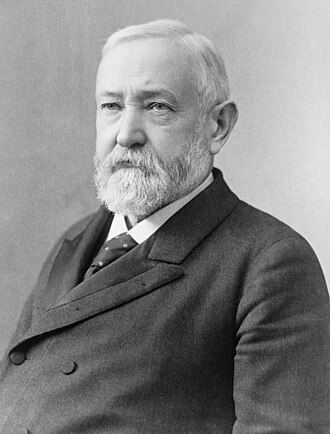
Early Statesman synthesis distilling legal jargon into practical meaning, statutory anchors, and structural constitutional impacts.
This executive order, signed by President Benjamin Harrison on 1890-04-24, establishes federal administrative policy concerning "Executive Order." It is a direct, concise executive instruction delivering focused administrative or military commands to department leadership.
Constitutional Assessment: This action represents an orderly exercise of Article II administrative discretion, managing the internal machinery and personnel of the executive branch without abridging the ancient liberties of the people.
Key Directives & Operative Actions
▪Formal executive instruction issued by the President establishing official administrative policy on Executive Order.
Constitutional & Societal Entities Impacted
🏛️ Merchants, Importers & Commercial Enterprises
🏛️ Sovereign State Governments & Localities
🏛️ Executive Departments & Federal Civil Servants
🏛️ Private Citizens & Property Owners
Total Words
248
1,424 characters
Estimated Read Time
1 min
@ 200 words / min
Flesch-Kincaid
15.2
Post-Grad reading level
Constitutional Polarity
+0.02
Framers' Alignment index
📜
Scholarly & Legal Citations
Exec. Order, "Executive Order," Benjamin Harrison (Apr 24, 1890). Available at https://executiveordersarchive.org/orders/app-executive-order-246.
Official Document Text
Source: The American Presidency Project (UCSB Archive)
To the Attorney-General: I have had frequent occasion during the last six months to confer with you in reference to the obstructions offered in the counties of Leon, Gadsden, Madison, and Jefferson, in the State of Florida, to the execution of the process of the courts of the United States. It is not necessary to say more of the situation than that the officers of the United States are not suffered freely to exercise their lawful functions. This condition of things can not be longer tolerated. You will therefore instruct United States Marshal Weeks as soon as he has qualified to proceed at once to execute such writs of arrest as may be placed in his hands. If he apprehends resistance, he will employ such civil posse as may seem adequate to discourage resistance or to overcome it. He should proceed with calmness and moderation, which should always attend a public officer in the execution of his duty, and at the same time with a firmness and courage that will impress the lawless with a wholesome sense of the dangers and futility of resistance. You will assure the officers of the law and those who have foolishly and wickedly thought to set the law at defiance that every resource lodged with the Executive by the Constitution and the laws will as the necessity arises be employed to make it safe and feasible to hold a Federal commission and to execute the duties it imposes. Very respectfully, BENJ. HARRISON