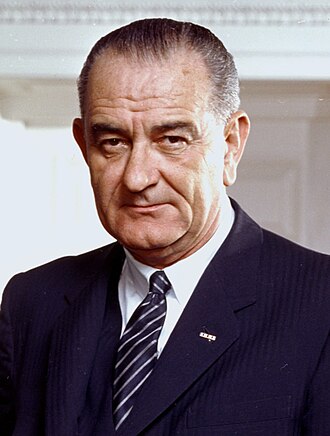
Official Document Text
Source: The American Presidency Project (UCSB Archive)
WHEREAS close cooperation between the Government and the private sector is essential to the future progress of our Nation; WHEREAS both the Government and the private sector will be enriched if the most promising young executives in each sector are given an opportunity to work in the other sector in challenging and responsible positions; and WHEREAS the President's Advisory Panel on Personnel Interchange has recommended establishment of a President's Commission on Personnel Interchange to implement a formal program of executive interchange: Now, THEREFORE, by virtue of the authority vested in me as President of the United States, it is ordered as follows: SECTION 1. Establishment of the Commission. (a) There is hereby established the President's Commission on Personnel Interchange (hereinafter referred to as the Commission). (b) The Commission shall be composed of such officials in the Federal departments and agencies and such persons from the private sector as the President may from time to time appoint. The Chairman shall be designated by the President. The members of the Commission and the Chairman shall serve two-year terms at the pleasure of the President. (c) Members of the Commission who are officers or employees of the Federal Government shall receive no additional compensation by reason of this order, and members who are not such officers or employees shall serve without compensation, but shall be provided with travel expenses, including per diem in lieu of subsistence, as authorized by law. SEC. 2. Functions of the Commission. The Commission shall: (a) Develop an Executive Interchange Program under which promising young executives from the Federal departments and agencies and the private sector will be selected as Interchange Executives and placed in positions offering challenge and responsibility in the other sector. (b) Develop an education program designed to place the work experience of the Interchange Executives in the broader context of Government and the private sector. (c) Supervise and review the operation of the Program, and make recommendations to the President as to ways of promoting interchange between the Government and the private sector. SEC. 3. Federal Departments and Agencies. (a) Each Federal department and agency shall cooperate with the Commission and shall furnish it with such assistance as the Chairman may request in connection with the Program. (b) The head of each Federal department and agency shall designate a presidential appointee who is not a member of the Commission to serve as liaison to the Commission. (c) The Civil Service Commission shall provide the Commission with administrative services, staff support, and travel expenses, as authorized by law. LYNDON B. JOHNSON The White House January 19, 1969