Early Statesman synthesis distilling legal jargon into practical meaning, statutory anchors, and structural constitutional impacts.
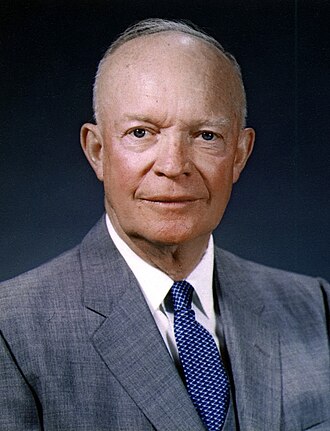
This executive order, signed by President Dwight D. Eisenhower on 1955-02-28, establishes federal administrative policy concerning "Amending Executive Order No. 10483, Establishing the Operations Coordinating Board." It outlines operative directives for executive department officers, delegating enforcement responsibilities and establishing official governance guidelines.
Constitutional Assessment: Scrutinized through Article II, Section 2, this action exercises the President's constitutional role as Commander in Chief. Early Framers recognized broad executive discretion in commanding military forces during conflict, provided it remains bounded by congressional declarations and respects civilian domestic courts.
Key Directives & Operative Actions
▪By virtue of the authority vested in me by the Constitution and statutes, and as President of the United States, it is ordered that subsections (b) and (d) of section 1 of Executive Order No.
▪5379) be, and they are hereby, amended to read, respectively, as follows: "(b) The Board shall have as members the following: (1) the Under Secretary of State, who shall represent the Secretary of State and shall be the chairman of the Board, (2) the Deputy Secretary of Defense, who shall represent the Secretary of Defense.
Constitutional & Societal Entities Impacted
🏛️ Armed Forces & Military Establishments
🏛️ Sovereign State Governments & Localities
🏛️ Foreign Nations & International Entities
Total Words
256
1,469 characters
Estimated Read Time
1 min
@ 200 words / min
Flesch-Kincaid
17.6
Post-Grad reading level
Constitutional Polarity
+0.02
Framers' Alignment index
📜
Scholarly & Legal Citations
Exec. Order No. 10598, Dwight D. Eisenhower (Feb 28, 1955). Available at https://executiveordersarchive.org/orders/app-executive-order-10598-amending-executive-order-no-10483-establishing-the-operations.
Official Document Text
Source: The American Presidency Project (UCSB Archive)
By virtue of the authority vested in me by the Constitution and statutes, and as President of the United States, it is ordered that subsections (b) and (d) of section 1 of Executive Order No. 10483 of September 2, 1953 (18 F. R. 5379) be, and they are hereby, amended to read, respectively, as follows: "(b) The Board shall have as members the following: (1) the Under Secretary of State, who shall represent the Secretary of State and shall be the chairman of the Board, (2) the Deputy Secretary of Defense, who shall represent the Secretary of Defense. (3) the Director of the Foreign Operations Administration, (4) the Director of Central Intelligence, (5) the Director of the United States Information Agency, and (6) one or more representatives of the President to be designated by the President. Each head of agency referred to in items (1) to (5), inclusive, in this section 1 (b) may provide for an alternate member who shall serve as a member of the Board in lieu of the regular member representing the agency concerned when such regular member is for reasons beyond his control unable to attend any meeting of the Board; and any alternate member shall while serving as such have in all respects the same status as a member of the Board as does the regular member in lieu of whom he serves." "(d) The Special Assistant to the President for National Security Affairs may attend any meeting of the Board." DWIGHT D. EISENHOWER THE WHITE HOUSE, February 28, 1955.